Wrestling Near Me: How to Find a Good Wrestling Club (2026)
Searching “wrestling near me” usually turns up a mix of school teams, youth clubs, MMA gyms and pro wrestling shows, and it is hard to tell which ones actually teach wrestling well. This guide shows you how to find a real wrestling club wherever you live, which program type fits you, and what separates a great room from a bad one.
Quick answer: To find wrestling near you, search USA Wrestling’s Find a Club tool by zip code, check your local high school and youth league, and look at MMA gyms that run dedicated wrestling classes. Adults can use masters wrestling directories. Then visit two or three rooms and score each one on coaching, safety and cleanliness before you pay.
How do you find wrestling near me?
The fastest way to find wrestling near you is USA Wrestling’s Find a Club search, where you enter your zip code and a travel radius. Then check nearby high school and middle school programs, local youth leagues, and MMA or grappling gyms that list wrestling on their class schedule.
Work through these steps in order:
- Search the national club finder. USA Wrestling’s Find a Club tool returns registered clubs within the radius you choose.
- Ask the local school. High school and middle school coaches know every youth club, summer program and open mat in the area, even ones with no website.
- Search maps for “wrestling club” and “wrestling academy”. Read the class schedule, not just the reviews, and look for real practice times by age group.
- Check MMA and grappling gyms. Many run a wrestling or takedowns class taught by a former high school or college wrestler.
- Adults: use masters directories. Adult wrestling clubs are rarer, so use the dedicated finders below.
- Visit before you sign anything. Watch a full practice and use the scorecard later in this guide.
Which wrestling club finders should you use?
The most useful wrestling club finders are USA Wrestling’s Find a Club tool for registered clubs, masters wrestling directories for adult programs, and your state wrestling association’s club list. General map searches fill the gaps, but they mix in pro wrestling shows and gyms that only teach a few takedowns.
| Finder | Best for | What it covers | Watch out for |
|---|---|---|---|
| USA Wrestling Find a Club | Kids, teens and competitive adults | Registered clubs by zip code and radius | Listings can be out of date, so call first |
| Masters Wrestling club list | Adults and veterans | Clubs and gyms that welcome older wrestlers | Smaller list, strongest in big metro areas |
| Wrestlers Without Borders clubs | Adult recreational wrestlers | Inclusive adult clubs in the US and abroad | Only a handful of cities |
| State wrestling association site | Youth and high school families | Local clubs, tournaments and season dates | Every state’s site is organized differently |
| Google Maps and school coaches | Filling the gaps | Academies, MMA gyms and school programs | Mixes in pro wrestling and events |
What type of wrestling program do you want?
Pick the program by age and goal. Kids usually start in a youth folkstyle club, teens add school wrestling and offseason freestyle or Greco-Roman, and adults choose between masters clubs and MMA gym wrestling classes. Pro wrestling schools are a separate world that teaches scripted performance, not competitive amateur wrestling.
In the United States, school and college wrestling uses folkstyle, also called collegiate wrestling, which rewards control and riding an opponent on the mat (Folkstyle wrestling). The Olympic styles are freestyle and Greco-Roman, and Greco-Roman has been part of every Summer Olympics since 1904 (Greco-Roman wrestling). Greco-Roman bans holds below the waist, so it rewards upper-body throws. US college women’s wrestling is held under freestyle rules (Freestyle wrestling).
| Program | Best for | Main style | When it runs |
|---|---|---|---|
| Youth club | Kids about 4 to 14 | Folkstyle, some freestyle | Winter season, often November to March |
| School team | Middle and high school students | Folkstyle | Winter school season |
| Offseason or academy club | Competitive teens | Freestyle and Greco-Roman | Spring and summer, some year round |
| Masters or adult club | Adults 18 and up, ex-wrestlers | Freestyle or folkstyle | Weekly practices, year round |
| MMA or grappling gym class | Adults who want takedowns for MMA or BJJ | Mixed, no-gi focused | Year round on the class schedule |
| Pro wrestling school | Future performers | Scripted pro wrestling | Year round, separate from amateur wrestling |
What should a good wrestling club have?
A good wrestling club has a qualified head coach, clean mats that are mopped and disinfected every day, groups split by age and size, a structured practice with drilling and live wrestling, and skin checks before practice. It should also be registered with USA Wrestling or your state body so members are insured.
Look for these signs when you visit:
- A real coaching staff. A head coach with competitive or coaching background, plus enough assistants to watch every pair.
- Clean mats and a clean room. Wrestling is skin-to-skin, and skin infections such as herpes gladiatorum spread through direct contact (Herpes gladiatorum). Daily mat cleaning and skin checks are non-negotiable.
- Sensible partner matching. Kids and beginners drill with people near their weight and level, not with the strongest athlete in the room.
- A clear practice plan. Warm-up, technique, drilling, live goes and conditioning, in that order.
- Registration and insurance. Clubs registered with USA Wrestling require each athlete to hold a membership card, which includes insurance coverage.
Which wrestling club red flags should you avoid?
Avoid wrestling rooms with dirty mats, no skin checks, coaches who let heavy kids crush much lighter ones, extreme weight cutting for young athletes, or pressure to sign a long contract before a trial practice. Also be careful with gyms that advertise wrestling but only teach a few takedowns at the start of a BJJ class.
- Weight cutting for kids. Young wrestlers should compete near their natural weight. Rapid cutting, sauna suits or skipping meals are bad signs.
- No supervision during live wrestling. Every live round needs a coach watching closely, because injuries happen fast.
- Ignoring injuries. Coaches should stop practice for a neck or head knock and send wrestlers with ear swelling for care. Our guide to cauliflower ear explains why fast treatment matters.
- Toxic culture. Hard practice is normal. Humiliation, hazing and screaming at kids are not.
- No free or cheap trial. A confident club lets you watch or try a practice first.
How do you score a wrestling club before you join?
Score each wrestling club from 1 to 5 on six factors: coaching, safety, cleanliness, level fit, schedule and cost. Add the scores, then join the room with the highest total that you can attend consistently. Showing up three times a week at a good club beats twice a month at a famous one.
The Wrestling Club Scorecard (our checklist, 2026):
| Factor | What a 5 out of 5 looks like | What a 1 out of 5 looks like |
|---|---|---|
| Coaching | Experienced head coach plus assistants who correct technique | One coach, no feedback, just live wrestling |
| Safety | Partners matched by size and level, coach watches every live round | Mismatched partners, no supervision |
| Cleanliness | Mats disinfected daily, skin checks, showers encouraged | Dirty mats, wrestlers train with open sores |
| Level fit | Separate beginner group or clear beginner progression | Beginners thrown straight into hard live goes |
| Schedule | Practices fit your week, at least 2 to 3 per week | Times you cannot make, frequent cancellations |
| Cost and value | Clear season or monthly price, no long contract | Hidden fees, pressure to sign before a trial |
A total of 25 or more out of 30 is a strong room. Anything under 18 is worth skipping if you have another option within driving distance.
What happens at your first wrestling practice?
Your first wrestling practice usually starts with a dynamic warm-up and stance work, then moves to basic technique such as a stance, penetration step, double leg and sprawl. Beginners drill with a partner, may do light live wrestling, and finish with conditioning. Expect to be tired, sweaty and a little sore the next day.
Bring water, athletic shorts and a fitted T-shirt or rash guard, and wear wrestling shoes if you have them. Trim your nails, remove jewelry and arrive a few minutes early so the coach can pair you with a sensible partner. Tell the coach about any old injuries before practice starts.
How much does wrestling cost?
Wrestling is one of the cheaper combat sports. Most clubs require a USA Wrestling athlete membership of about $60 to $65 for the 2026-27 season, depending on your state, plus a club fee that ranges from free at volunteer youth programs to a few hundred dollars per season.
Typical costs to plan for:
- USA Wrestling athlete membership: about $60 to $65 per season, valid September 1 to August 31, required for practices and events at registered clubs.
- Club or season fee: some nonprofit youth programs charge nothing beyond the card, while others charge a few hundred dollars for the winter season. Private academies usually charge monthly, closer to a BJJ or MMA gym.
- Tournament entry: often around $25 per local event.
- Gear: shoes, headgear and a singlet or two-piece uniform, covered in the next section.
What gear do you need for wrestling?
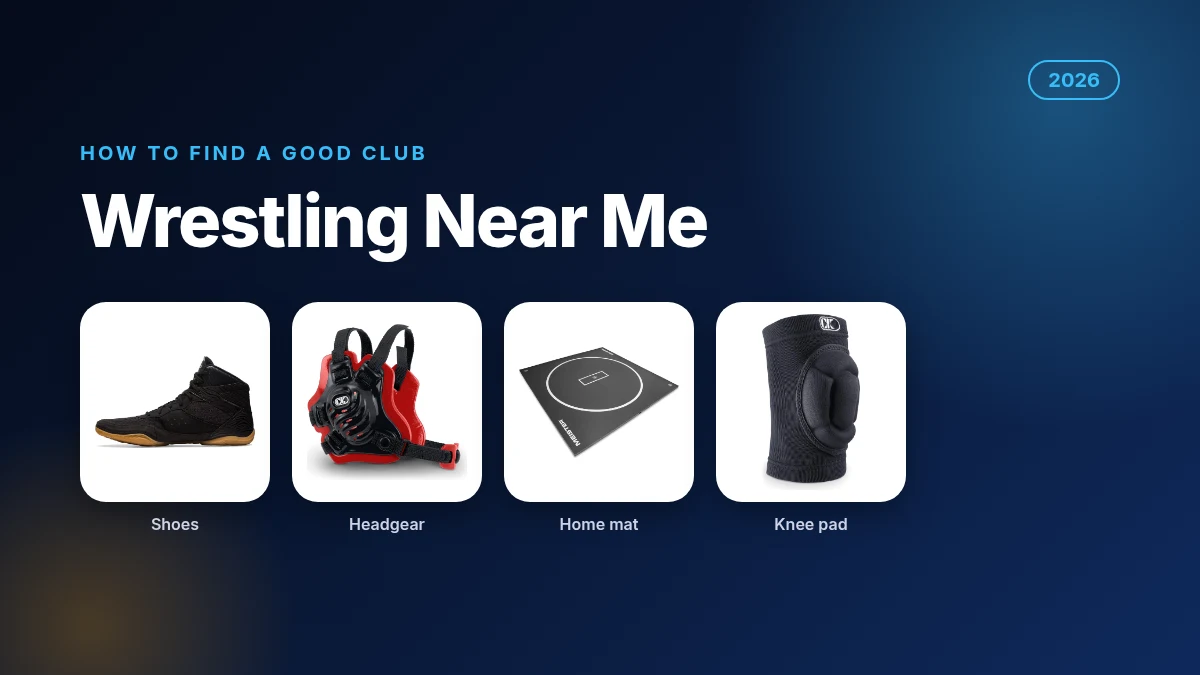
To start wrestling you need wrestling shoes and a mouthguard, and most clubs require headgear for competition. Kids and teens also need a singlet or an approved two-piece uniform for tournaments. Knee pads are optional but popular. Buy shoes first, because training barefoot or in running shoes is unsafe on mats.
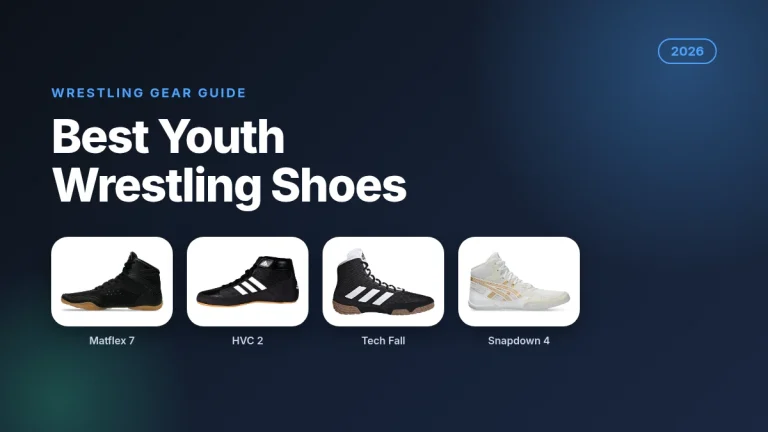
- Wrestling shoes: grippy, ankle-high and light. Parents can compare beginner-friendly picks in our guide to the best youth wrestling shoes.
- Headgear: protects the ears from rubbing and impacts and is required in US school and youth competition.
- Singlet: needed for tournaments, though many clubs let you practice in shorts and a shirt. See the best wrestling singlets for sizing and fabric tips.
- Mouthguard and knee pads: cheap insurance for teeth and knees during live wrestling.
Can adults start wrestling as beginners?
Yes, adults can start wrestling as beginners. The easiest routes are a masters or adult wrestling club, a wrestling class at an MMA or grappling gym, or an adult open mat. Start with drilling and controlled live rounds, because wrestling is intense and adult joints recover more slowly than teenage ones.
Adult clubs usually train once or twice a week and welcome people with no background. If there is no adult club nearby, an MMA gym is the most common option, so use our checklist for MMA classes near me to find one with a real wrestling coach. If you are deciding between grappling styles, our BJJ vs wrestling comparison explains how the two differ for fitness, self-defense and MMA.
Is wrestling near me the same as pro wrestling?
No. Amateur wrestling, such as folkstyle, freestyle and Greco-Roman, is a real competitive sport scored on takedowns, control and pins. Pro wrestling is scripted entertainment with predetermined outcomes, trained at separate pro wrestling schools. If you search “wrestling near me” for shows or performer training, look for promotions and pro schools instead.
Pro wrestling still takes serious athleticism, as our guide to whether pro wrestling is fake explains, but the training, costs and goals are completely different from an amateur wrestling club.
Frequently Asked Questions
How do I find a wrestling club near me?
Use USA Wrestling’s Find a Club tool, enter your zip code and pick a travel radius. Then ask local high school coaches, check your state wrestling association and search maps for wrestling clubs and academies. Visit at least two rooms and watch a full practice before joining.
What age can kids start wrestling?
Many youth wrestling clubs accept kids from about 4 or 5 years old, with age and weight divisions to keep matches fair. The best age is when a child can follow instructions for a full practice. Beginners of any age can join, since many clubs run separate groups for first-year wrestlers.
Can I start wrestling as an adult with no experience?
Yes. Masters and adult wrestling clubs welcome complete beginners, and many MMA and grappling gyms run wrestling classes for adults. Start with technique and drilling, add live rounds gradually, and choose partners near your size and level to stay healthy while you learn.
How much does it cost to join a wrestling club?
Expect about $60 to $65 for a USA Wrestling athlete membership for the 2026-27 season, plus a club fee that ranges from free to a few hundred dollars per season. Private academies usually charge monthly, and local tournaments often cost around $25 to enter.
What should I wear to my first wrestling practice?
Wear athletic shorts without pockets or zippers, a fitted T-shirt or rash guard and wrestling shoes if you have them. Bring water and a mouthguard, trim your nails and remove all jewelry. Most clubs do not require a singlet or headgear for a first practice.