First BJJ Class: What to Expect, Wear and Bring (2026)
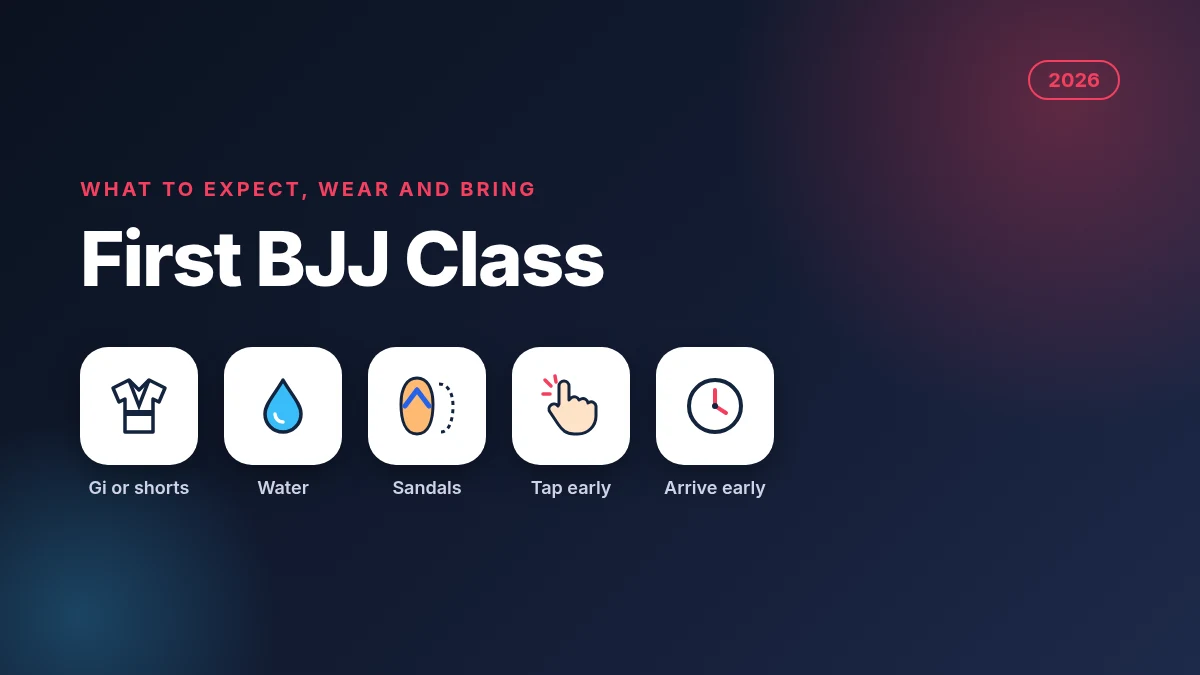
Your first BJJ class is mostly a warm-up, one or two techniques shown by the coach, drilling them with a partner, and sometimes a few minutes of light rolling. Wear fitted shorts and a T-shirt or rash guard (ask if the gym lends a gi), trim your nails, bring water and sandals, and tap early. You will be confused and tired. That is the curriculum.
The nervous questions people ask before day one are almost always the same: what do I wear, will I have to spar, will I look stupid, and how sore will I be tomorrow? Below are straight answers, a class-by-the-minute table, a packing checklist and the etiquette nobody explains until you break it.
What happens in a first BJJ class?
Most first BJJ classes follow the same pattern: 10 to 15 minutes of warm-ups like shrimping and breakfalls, 20 to 30 minutes of the coach showing a technique and partners drilling it, then optional positional sparring or rolling. Beginners are usually paired with a patient upper belt and told to go slow.
Gyms vary, but the skeleton is surprisingly consistent across schools. Warm-ups use movements you will see for years, so do not panic if “shrimping” sounds like a seafood order. The technique block is the heart of class: watch, ask one clear question if you are lost, then drill on a willing partner. Many gyms run a separate fundamentals class for new students, which is the one you want.
| Class segment | Typical length | What you do | First-day tip |
|---|---|---|---|
| Arrive and check in | 10 to 15 min before | Waiver, meet the coach, ask about a loaner gi | Say it is your first class, out loud |
| Warm-up | 10 to 15 min | Jogging, shrimping, breakfalls, rolls | Copy the person in front of you |
| Technique | 20 to 30 min | Coach demos a move, partners drill it | Go slow, ask one question |
| Positional sparring | 10 to 15 min | Start in a set position like guard | Breathe, survive, tap early |
| Open rolling | 0 to 20 min | Free sparring, often optional for new students | Sitting it out on day one is fine |
| Line-up and bow out | 2 to 5 min | Thank partners, slap and bump | Shake hands, smile, come back |
Do you have to spar in your first BJJ class?
Usually not. Many gyms let first-timers watch open rolling or do light positional sparring only, and a good coach will ask before pairing you with anyone. If you do roll, start slowly with a higher belt, keep your movements controlled, and tap the moment something feels tight. Nobody keeps score.
Sparring in BJJ is called rolling, and it is the part that scares people most. The rule worth memorizing is simple: if you do not know what to do, do less, not more. Explosive panic moves are how white belts hurt themselves and their partners. Being stuck under side control is not dangerous. Throwing a wild elbow to escape it is.
If your hands are trapped, say “tap” clearly. If you think your partner tapped, let go first and ask later.
What should you wear to your first BJJ class?
For a no-gi class, wear fitted athletic shorts with no pockets, zippers or belt loops, plus a T-shirt or rash guard. For a gi class, ask if the gym lends a gi and wear shorts and a fitted shirt under it. Remove all jewelry, and leave your shoes at the edge of the mat.
Loose basketball shorts and baggy cotton shirts are the classic rookie uniform. They work, but fingers and toes get caught in them and they turn into a wet towel by minute twenty. A fitted rash guard and grappling shorts fix both problems for little money. If you stick with gi training, our guide to the best BJJ gi for beginners covers fit and shrinkage before you spend on one. Skip the cup for now unless the coach says otherwise; most grapplers do not wear one.
What should you bring to your first BJJ class?
Bring a water bottle, sandals or flip-flops for walking off the mat, a towel, and a bag for sweaty clothes. A mouthguard is a smart extra if you might roll. Trim fingernails and toenails before you leave home, and arrive 10 to 15 minutes early to sign the waiver.
| Item | Why it matters | Must have? |
|---|---|---|
| Water bottle | You will sweat more than you expect | Yes |
| Sandals or flip-flops | Mats are bare feet only, bathrooms are shoes only | Yes |
| Trimmed nails | Long nails scratch partners and tear on gis | Yes |
| Fitted shorts and rash guard or T-shirt | Nothing for fingers and toes to catch | Yes |
| Gi (or loaner) | Required only for gi classes | Ask first |
| Mouthguard | Protects teeth if you roll | Recommended |
| Hair tie | Long hair gets grabbed and pulled | If needed |
| Towel and plastic bag | Sweat cleanup, wet clothes home | Nice to have |
What are the unwritten rules of BJJ class?
Keep shoes off the mat and bare feet off the bathroom floor, show up clean with trimmed nails, never train with an open cut or rash, listen while the coach talks, and tap early. Do not coach your partner on day one, and do not try a move you saw on YouTube.
Hygiene is not just manners in a grappling gym. Skin infections spread on mats, which is why gyms are strict about clean clothes and covered cuts. Wash your training clothes after every class and shower soon after. If you ever spot a red ring-shaped patch, read our guide on ringworm in BJJ before your next session.
A few more rules that save awkward moments:
- Slap hands and bump fists before a roll. It means “ready, let’s go easy.”
- If two pairs are about to collide, the lower belt usually moves.
- Do not leave the mat without telling the coach, even for water.
- When the coach is talking, stop rolling and sit.
- Wear your belt for gi class. If you are not sure how, our guide on how to tie a BJJ belt takes two minutes.
How do you stop feeling nervous before your first BJJ class?
Tell the coach it is your first class, take the fundamentals session, and set one goal like “tap early and learn one move.” Everyone in the room was the lost new person once, and most remember it. Your job is to survive, ask questions, and come back, not to win anything.
Nerves usually come from two fears: looking stupid and getting hurt. You will look a bit lost, and so does every beginner, so that one is already priced in. The injury fear is managed by the same three habits: go slow, tap early, avoid spazzing. If you are starting later in life, our guide on whether you are too old for BJJ covers what changes after 30, 40 and 50.
How sore will you be after your first BJJ class?
Expect sore neck, forearms, grip and hips for one to three days, plus being more out of breath than any gym session made you. That is normal. Hydrate, sleep, walk the next day, and come back within the week. Sharp joint pain or pain that worsens is different: get it checked.
The grip and neck soreness come from gripping and from posture against someone pulling your head down, two things normal workouts barely train. The cardio shock is real too: grappling is full-body isometric work, and beginners burn energy by tensing everything. Our guide on how to stop gassing out in BJJ explains why relaxing is the fastest cardio upgrade.
How often should you train after your first BJJ class?
Two classes a week is the sweet spot for most beginners after the first session. It is enough to remember techniques between classes without beating up a body that is still adjusting. Add a third day after a month or two if recovery is good. Consistency beats intensity for at least the first year.
The biggest predictor of progress is simply showing up. Most people who quit do it in the first few weeks, when everything still feels confusing. Pick two fixed days, put them in your calendar like appointments, and give it a full month before you judge whether BJJ is for you.
First BJJ Class FAQ
What should I wear to my first BJJ class?
Fitted athletic shorts with no pockets or zippers and a T-shirt or rash guard. For gi classes, ask whether the gym lends a gi and wear the shorts and shirt underneath. No jewelry, no shoes on the mat.
Do I need to be in shape before my first BJJ class?
No. BJJ is how many people get in shape. The warm-up is scaled for beginners, you can rest when needed, and nobody expects a new student to keep up. Being relaxed matters more than being fit.
Will I get hurt in my first BJJ class?
Injury risk on day one is low if you go slow, tap early and avoid explosive moves. Most first-class problems are sore muscles and mat burn, not real injuries. Tell your partner about any old injuries before you roll.
Should I bring a gi to my first BJJ class?
Not unless you already own one. Many gyms lend a gi for a trial class or start you in no-gi. Ask when you book the trial, and wait a few weeks before buying so you know the gym’s rules on colors and patches.
Is it normal to feel lost in my first BJJ class?
Completely. New students forget techniques minutes after drilling them, mix up left and right, and get stuck in every position. Confusion is the normal first stage of learning BJJ, and it fades with consistent classes.
How long is a first BJJ class?
Most BJJ classes run 60 to 90 minutes, including warm-up, technique, drilling and sparring. Arrive 10 to 15 minutes early on your first day to sign a waiver, change and meet the coach before class starts.
What is the bottom line on your first BJJ class?
Your first BJJ class is a warm-up, a technique, some drilling and maybe light rolling. Wear fitted clothes, bring water and sandals, trim your nails, tell the coach you are new, and tap early. You will be tired and lost. Come back anyway. That second class is where it starts making sense.