
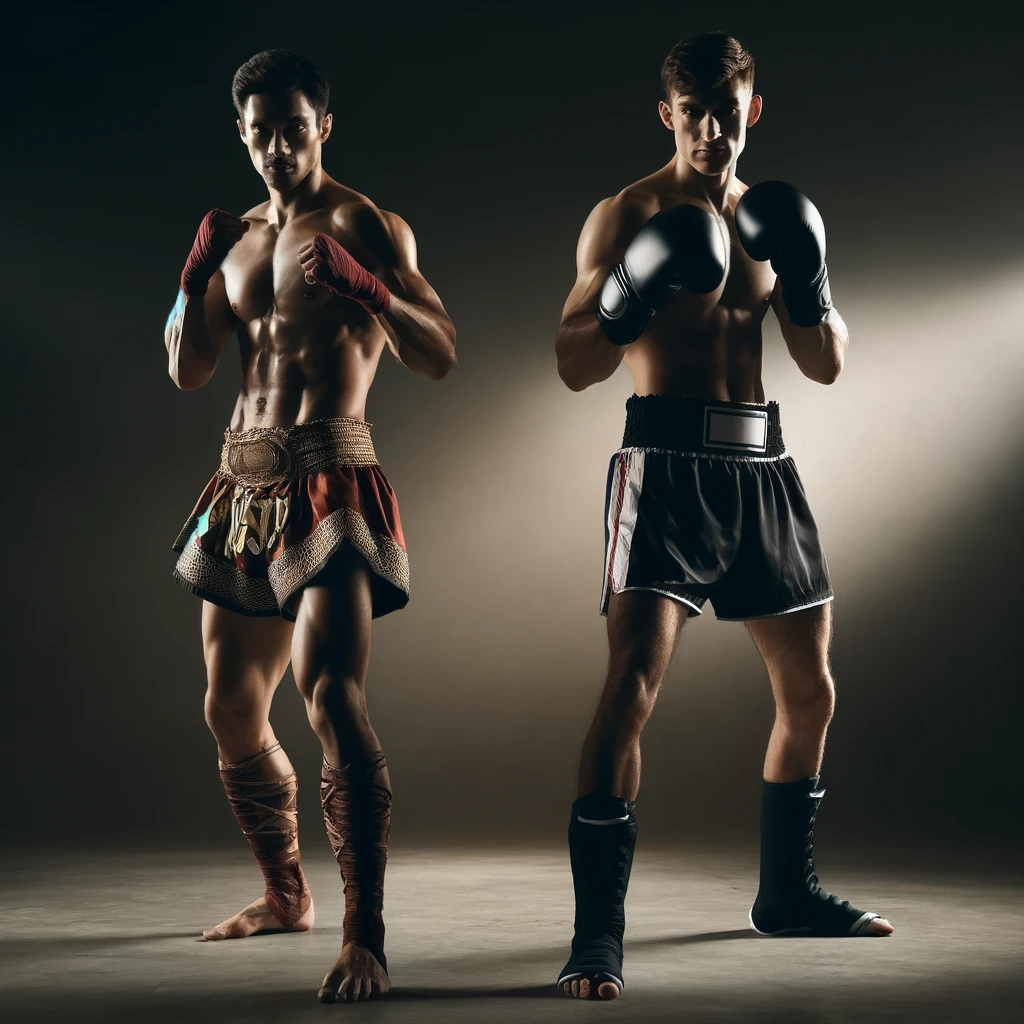
Muay Thai vs Boxing Showdown: Which Reigns Supreme? (2024)
Thanks for checking out this unbiased article on Muay Thai vs Boxing. In the realm of combat sports, the debate between the ancient art of Muay Thai and the classic discipline of boxing is a never-ending saga that intrigues beginners and seasoned fighters alike.
Both sports have carved out significant niches within the fitness and martial arts community, offering unique challenges and benefits to their practitioners.
This comparison aims to shed light on the distinct features and philosophies underlying each discipline, helping you navigate through the complexities of choosing the right path for your martial arts journey.
The popularity of combat sports has surged in recent years, thanks in part to the global broadcasting of matches and a growing awareness of the physical and mental benefits these disciplines offer.
However, this increase in interest often comes with a cloud of confusion, especially for novices trying to distinguish between the nuanced techniques and cultures of Muay Thai and boxing.
By diving into the histories, techniques, and philosophies of these sports, we aim to provide clarity and dispel common myths surrounding each discipline.
Choosing between Muay Thai and boxing is more than just a matter of preference; it’s about understanding which sport aligns with your fitness goals, fighting style, and personal interests.
Whether you’re drawn to the “Art of Eight Limbs” for its versatility and dynamic range of techniques, or you’re captivated by the strategic depth and precision of boxing, this guide will equip you with the knowledge you need to make an informed decision.
So, lace up your gloves, and let’s embark on this exciting journey to uncover the essence of Muay Thai and boxing.
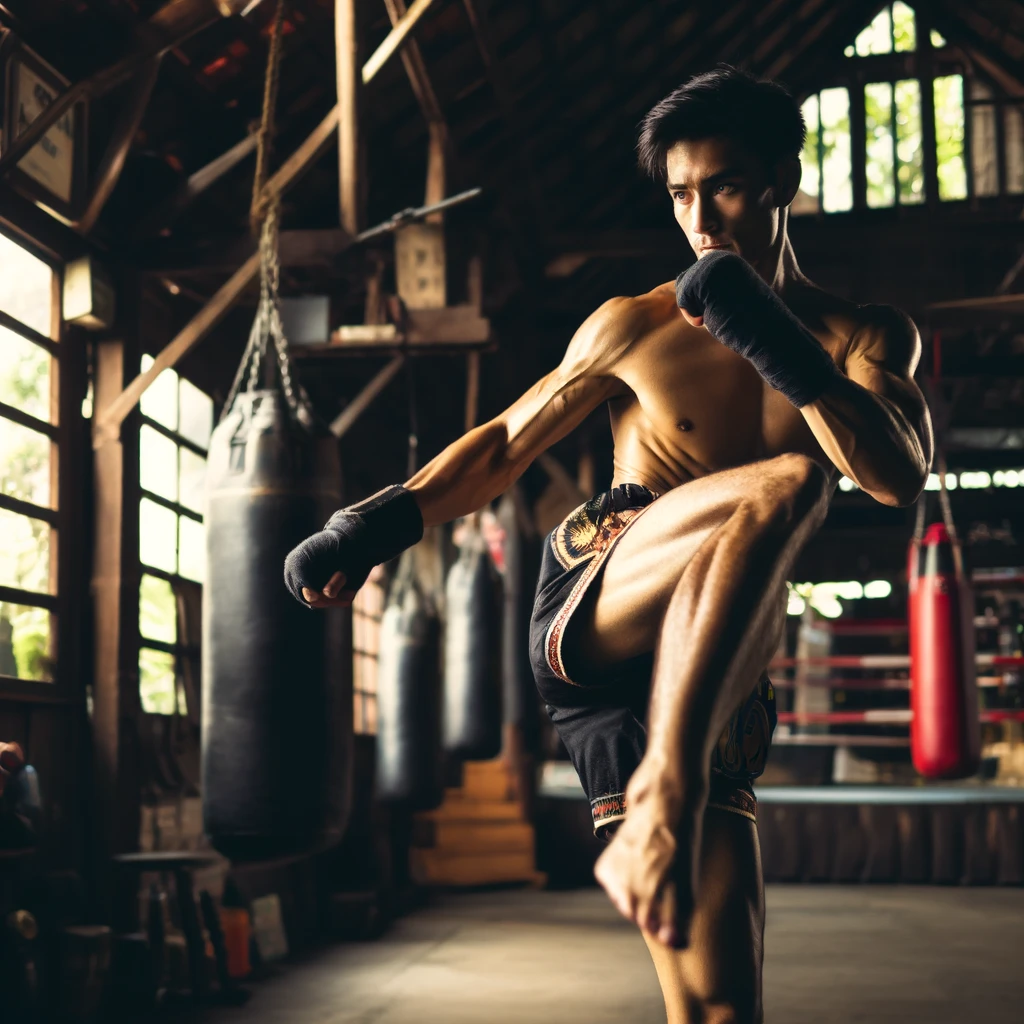
Muay Thai vs Boxing Showdown: Which Reigns Supreme?
Historical Background
The Origins of Muay Thai
Muay Thai, often referred to as the “Art of Eight Limbs,” boasts a rich heritage that dates back centuries in Thailand. This combat sport utilizes a symphony of kicks, punches, elbow and knee strikes, making it one of the most comprehensive striking disciplines in the world.
Its roots can be traced to ancient battlefields where Siamese soldiers practiced it as a form of close-combat that utilized the entire body as a weapon.
Over the years, Muay Thai evolved from military practice to a sporting event, with rituals and traditions that reflect Thai culture and history.
The Evolution of Boxing
Boxing, known as the “Sweet Science,” has a storied history that spans across multiple cultures and millennia. Ancient civilizations like the Greeks, Romans, and Egyptians practiced forms of boxing for sport, entertainment, and training for combat.
The modern form of boxing, with its structured rounds and rule sets, began to take shape in 18th century England, where it transitioned from bare-knuckle brawls to a regulated sport with gloves.
This evolution continued into the 19th and 20th centuries, with the establishment of organizations like the World Boxing Association (WBA), which played pivotal roles in shaping the professional boxing scene we know today.
Comparing Histories: A Reflection of Culture and Society
The historical trajectories of Muay Thai and boxing are not just stories of sports development; they are reflections of the cultures and societies from which they originated.
Muay Thai’s integration of dance, music, and spirituality showcases the rich tapestry of Thai culture, while boxing’s evolution mirrors changes in societal attitudes towards sports, entertainment, and masculinity.
These histories offer fascinating insights into how combat sports can influence, and be influenced by, the times and contexts in which they flourish.
Fundamental Differences
Rules and Regulations
Both Muay Thai and boxing come with a set of rules and regulations that define the scope of the sport, ensuring safety and fairness for all competitors.
In Muay Thai, fighters are allowed to use their fists, elbows, knees, and shins, which accounts for the nickname “Art of Eight Limbs.” Matches are typically fought over 3 to 5 rounds, with each round lasting 3 minutes.
Boxing, on the other hand, restricts competitors to using only their fists. Boxing matches can vary significantly in duration, from 4 to 12 rounds, depending on the competition level, with professional bouts usually lasting 12 rounds.
Fighting Techniques and Stances
The techniques and stances in Muay Thai and boxing are distinct, shaped by the sports’ different rules. Muay Thai fighters adopt a more upright stance to defend against and deliver a wider range of attacks, including kicks, elbows, and knee strikes.
Boxing stances tend to be more crouched and compact, optimizing defense against punches and facilitating upper body movement and footwork. The difference in stances and techniques significantly affects the training focus, strategic approach, and physical demands of each sport.
Scoring System
The scoring systems in Muay Thai and boxing also differ, influencing the strategies fighters use during matches. Muay Thai scoring is highly nuanced, with emphasis on technique, effectiveness, and aggression.
Strikes that demonstrate control and power, especially those using knees and elbows, are scored highly. In contrast, boxing utilizes a points system based on the number of clean hits, defense, control of the ring, and effective aggression.
Understanding these scoring nuances is crucial for fighters and trainers alike, as it shapes the way athletes prepare for and engage in combat.

Training and Conditioning
Physical and Mental Preparation in Muay Thai
Training for Muay Thai is as much about mental fortitude as it is about physical preparation. Practitioners undergo rigorous routines that not only focus on enhancing strength, flexibility, and endurance but also instill discipline and respect — core values in Thai culture.
A typical training session includes running, shadow boxing, heavy bag work, pad work with a trainer, and clinch work, which helps fighters learn to control their opponents using their body weight.
Mental preparation involves meditation and visualization techniques to develop focus, resilience, and strategic thinking.
The Rigors of Boxing Training
Boxing training emphasizes speed, agility, power, and endurance. Athletes spend countless hours perfecting their punch technique, footwork, and defensive maneuvers.
Training sessions often include jump rope for agility, speed bag work to improve hand-eye coordination, and sparring to simulate real fight conditions.
Mental toughness is a crucial aspect of boxing training, with fighters learning to remain calm and focused under pressure, anticipate their opponent’s moves, and quickly adapt their strategy during bouts.
Cross-Training Benefits for Both Sports
Cross-training between Muay Thai and boxing can offer athletes significant benefits, enhancing their versatility and adaptability.
Boxers can improve their kicking technique, knee strikes, and clinch work by incorporating Muay Thai into their regimen, which can offer them a broader range of offensive and defensive tools.
Conversely, Muay Thai fighters can refine their punching techniques and footwork by training in boxing, potentially increasing their precision and power in striking.
This hybrid approach can lead to a more well-rounded combat skill set, beneficial for competition in either sport or mixed martial arts (MMA).
Gear and Equipment
Essential Muay Thai Gear
For Muay Thai practitioners, having the right gear is crucial for both safety and performance. Gloves are the primary piece of equipment, designed to protect the hands and wrists during strikes.
They differ from boxing gloves in terms of flexibility and weight distribution, accommodating the clinch work that is integral to Muay Thai. Shin guards are another essential, protecting athletes during leg checks and kicks.
Training also typically involves the use of headgear and mouthguards for sparring sessions, as well as ankle supports to provide stability and reduce the risk of injury.
Boxing Must-Haves
Boxing gear is designed with the specific needs of the sport in mind. Boxing gloves are padded more heavily on the front to protect the knuckles during punches. Athletes also use hand wraps to secure the wrist and hand bones and provide additional padding.
For sparring, boxers wear headgear to mitigate the risk of head injuries and mouthguards to protect their teeth and jaw. Training equipment like heavy bags, speed bags, and double-end bags are essential for developing technique, power, and timing.
Safety Considerations
The importance of using high-quality, well-fitted gear cannot be overstated in combat sports. Equipment should be chosen with care, ensuring that it meets safety standards and is appropriate for the level of training or competition.
Proper use of gear can significantly reduce the risk of injury, allowing athletes to train effectively and compete safely. It’s also important for practitioners to regularly inspect and maintain their equipment, replacing any items that show signs of wear and tear.
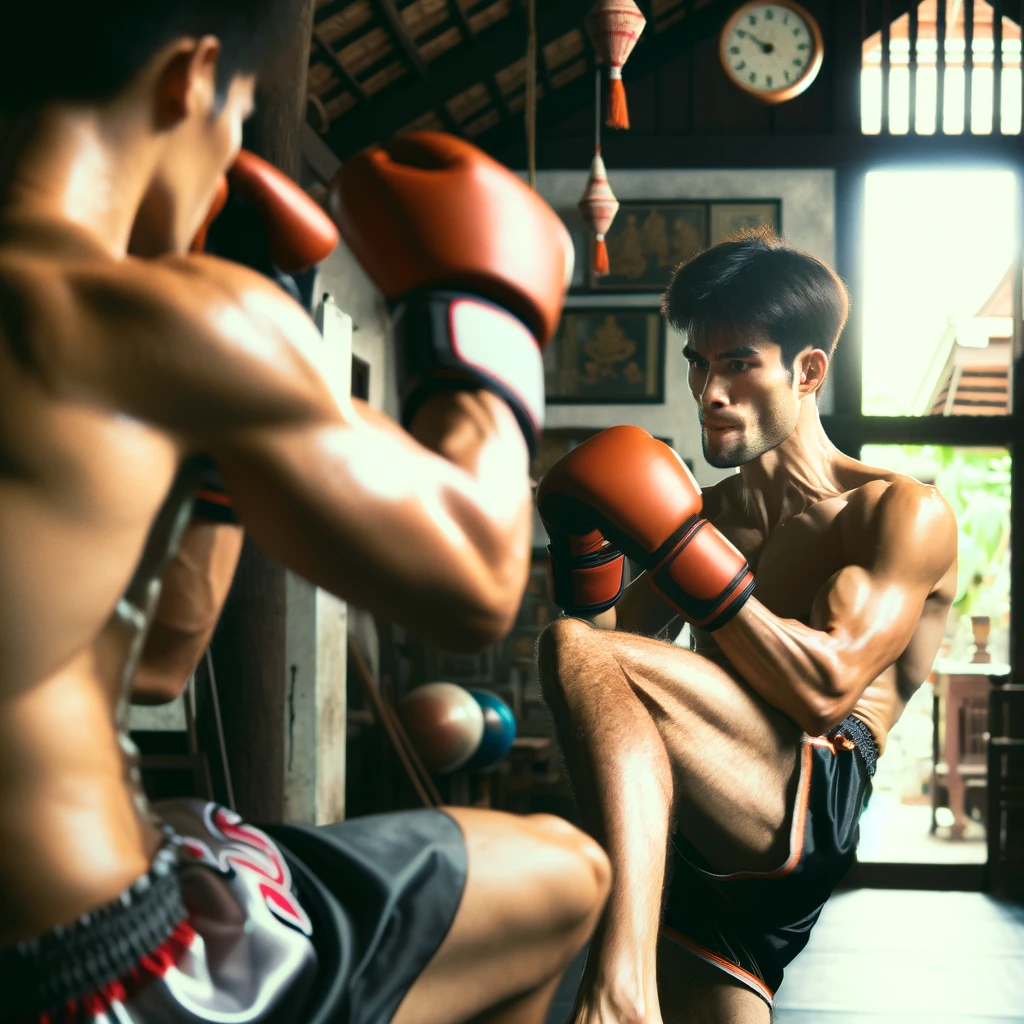
Fighting Strategies
The Art of Eight Limbs: Strategy in Muay Thai
Muay Thai, often celebrated as the “Art of Eight Limbs,” employs a comprehensive strategy that utilizes fists, elbows, knees, and shins. Distance Control is crucial in Muay Thai, with fighters learning to manage the space between themselves and their opponents effectively.
This involves using long-range weapons like kicks and teeps (front kicks) to keep opponents at bay or closing the distance to execute clinch work and short-range strikes like elbows and knees.
Clinch Work represents a pivotal aspect of Muay Thai strategy, where fighters aim to control their opponent’s posture to land strikes or set up throws.
Developing a deep understanding of timing and rhythm, alongside the ability to read and adapt to an opponent’s tactics, are key components of a successful Muay Thai strategy.
The Sweet Science: Boxing Strategy
Boxing is often referred to as the “Sweet Science” due to the strategic depth and technical precision required to excel. Punch Combinations and Footwork are foundational to boxing strategy, allowing fighters to create openings, land strikes, and navigate the ring.
Effective boxers master the art of Defense and Counterpunching, using movements like slips, rolls, and parries to avoid attacks and immediately responding with precise counterstrikes.
Ring Control is another essential strategy, where fighters use their movement and positioning to dictate the pace of the fight, corner their opponents, or maintain a favorable fighting distance.
The ability to anticipate and adapt to an opponent’s strategy while maintaining composure and focus under pressure is critical in boxing.
Adapting Strategies Across Disciplines
While Muay Thai and boxing employ distinct fighting strategies, cross-training between these disciplines can offer fighters a competitive edge.
Incorporating Muay Thai’s varied striking techniques and clinch work can enhance a boxer’s versatility, while the refined punching techniques and footwork of boxing can benefit Muay Thai practitioners.
Understanding and integrating elements from both sports can lead to a more well-rounded combat skill set, useful in both disciplines and applicable in mixed martial arts (MMA) competition.
Physical and Mental Benefits
Health Benefits of Muay Thai
Muay Thai offers a comprehensive workout that improves cardiovascular health, strength, flexibility, and endurance.
Cardiovascular Fitness is significantly enhanced through the high-intensity training sessions typical of Muay Thai, which involve rounds of shadowboxing, bag work, and sparring.
This intense cardiovascular exercise helps improve heart health and increases stamina. Strength and Conditioning are also key components of Muay Thai training, with clinching, kicking, and kneeing drills contributing to increased muscle strength and endurance.
The diverse range of movements in Muay Thai promotes Flexibility, reducing the risk of injuries and improving overall physical performance.
Mental Fortitude and Boxing
Boxing is not only a physical challenge but also a mental one, offering significant benefits for mental health and cognitive function.
Stress Relief is a major benefit, as the focus required during training and sparring sessions allows practitioners to release tension and frustration in a controlled environment.
Boxing also improves Focus and Concentration, as fighters must constantly anticipate and react to their opponent’s moves.
The discipline and self-control developed through regular training can enhance Self-Confidence, as practitioners see improvements in their skills and physical condition.
Injury Risks in Both Sports
While Muay Thai and boxing offer numerous health and fitness benefits, it’s important to acknowledge the Risk of Injury associated with both sports.
Common injuries include strains, sprains, bruises, and, in some cases, more serious injuries like concussions and fractures. Proper technique, appropriate safety gear, and supervised training are essential to minimize these risks.
Both beginners and experienced fighters should pay close attention to their bodies, allowing adequate rest and recovery to prevent overuse injuries. Awareness and prevention are key to enjoying the physical and mental benefits of these combat sports safely.

Professional Scene
Muay Thai in the Global Arena
Muay Thai has transcended its origins to become a globally recognized martial art and combat sport. International Competitions and Organizations have played a pivotal role in this expansion, showcasing the skill and athleticism of Muay Thai fighters on the world stage.
Events like ONE Championship and the World Muay Thai Council promote not only the sport but also the cultural heritage of Muay Thai, attracting a global audience.
Prominent Fighters have emerged as ambassadors of the sport, their careers highlighting the dedication, skill, and spirit required to succeed in the highly competitive world of professional Muay Thai.
Boxing’s Prominent Figures and Matches
Boxing has a long history of captivating audiences with its dramatic matches and larger-than-life personalities.
Historical Fights that have captured the public’s imagination include bouts like Muhammad Ali vs. Joe Frazier and Mike Tyson vs. Evander Holyfield, showcasing the intensity and drama of boxing at its highest level.
Current Stars and Champions continue to draw attention to the sport, with fighters like Canelo Álvarez and Tyson Fury leading the way.
These athletes are not just fighters; they’re also symbols of resilience, determination, and the pursuit of greatness, inspiring a new generation of boxers and fans alike.
The Business of Combat Sports
The professional scenes of both Muay Thai and boxing are underpinned by a complex Business and Promotional Network that includes promoters, managers, trainers, and broadcasters.
This network is essential for organizing events, securing sponsorships, and marketing fighters, playing a crucial role in the financial success and global reach of these sports.
Understanding the business side of combat sports is crucial for aspiring professionals, as it affects career opportunities, earnings, and the ability to make a lasting impact in the sport.
Choosing Your Path
Factors to Consider When Choosing Between Muay Thai and Boxing
When deciding whether to pursue Muay Thai or boxing, several Key Considerations can help guide your decision. Personal Fitness Goals are paramount; if you’re seeking a comprehensive workout that enhances agility, strength, and endurance, Muay Thai may be the better choice due to its diverse range of techniques.
However, if you’re interested in focusing on upper body strength, hand speed, and strategic combat, boxing might suit you better. Cultural and Historical Interest in the martial arts can also influence your choice, as each sport offers a rich heritage and philosophy.
Lastly, consider the Availability of Gyms and Training Facilities in your area, as well as the community and support they offer, which can significantly impact your learning experience and growth in the sport.
How to Get Started in Muay Thai
Embarking on your Muay Thai journey requires finding a reputable gym or training facility that emphasizes proper technique, safety, and respect for the sport’s traditions.
Choosing the Right Gym involves researching the qualifications and experience of the trainers, as well as the facility’s approach to training beginners.
Understanding the Basics through introductory classes or private lessons can provide a solid foundation in stance, movement, and basic strikes. Engaging with the Muay Thai Community, both locally and online, can also offer valuable support, motivation, and advice as you progress.
How to Begin Boxing
Starting a boxing journey is an exciting endeavor that begins with selecting a gym that aligns with your goals and comfort level.
Finding a Trainer who can guide you through the fundamentals of stance, punching techniques, and defense is crucial for building a strong foundation in the sport. Learning the Ropes involves not just physical training but also understanding the strategy and mental aspects of boxing.
As with Muay Thai, becoming part of the Boxing Community can enhance your training experience, providing opportunities for sparring, feedback, and camaraderie with fellow boxing enthusiasts.

Conclusion
Thanks for checking out this article on Muay Thai vs Boxing. We’ve journeyed through the histories, techniques, and cultures of these two formidable combat sports, each offering its own unique challenges and rewards.
Whether you’re drawn to the versatility and rich heritage of Muay Thai or the strategic depth and precision of boxing, there’s no denying the passion, dedication, and resilience required to excel in either discipline.
Choosing between Muay Thai and boxing isn’t just about picking a sport; it’s about finding a path that aligns with your personal goals, interests, and values.
Both disciplines offer profound physical and mental benefits, fostering a sense of community, discipline, and self-improvement that can extend far beyond the gym. As you consider your options, remember that the journey is as important as the destination.
Whichever path you choose, you’re embarking on a transformative journey that will challenge and reward you in equal measure. Here’s to the fighters, the dreamers, and everyone in between – your adventure in the world of combat sports is just beginning.
FAQ
Can a boxer beat a Thai boxer?
The outcome of a match between a boxer and a Thai boxer depends on various factors such as the rules under which they’re fighting, the fighters’ skill levels, and the strategies employed.
Under Muay Thai rules, a Thai boxer might have the advantage due to the ability to use elbows, knees, and kicks, including the powerful low kick and roundhouse kick.
In a boxing ring following western boxing rules, the boxer could have the upper hand with superior head movement and punching techniques. It’s a fascinating matchup that highlights the most telling differences between these striking arts.
Is there a difference between Muay Thai and Thai Boxing?
Muay Thai and Thai Boxing are often used interchangeably to refer to Thailand’s national sport. However, some purists reserve the term “Thai Boxing” for the more traditional form of the sport, known as Muay Boran, before modern Muay Thai rules were standardized.
Muay Boran includes techniques not allowed in contemporary Muay Thai, emphasizing the martial art’s rich heritage and the effectiveness of its techniques in ancient warfare and self-defense scenarios.
Is Muay Thai or boxing better for weight loss?
Both Muay Thai and boxing are excellent for weight loss, offering high-intensity workouts that can burn a significant number of calories. The choice between them may come down to personal preferences.
Muay Thai, being a martial art that utilizes a greater number of weapons—fists, elbows, knees, shins—might provide a more varied, full-body workout.
Boxing focuses more on upper body movement, jab and punch combinations, requiring intense bursts of energy that also contribute effectively to weight loss. Ultimately, consistency and enjoyment of the practice are key to weight loss success.
Can you train Muay Thai and boxing at the same time?
Training in both Muay Thai and boxing can be beneficial, as each complements the other well. Practitioners can improve their striking arts by blending the head movement and punching techniques of boxing with the kicks, knees, and clinch work of Muay Thai.
This hybrid approach can enhance a fighter’s versatility in the ring, no matter if they’re competing in amateur boxing, kickboxing, or even MMA.
Balancing training in both disciplines requires careful planning to avoid overtraining and to ensure proper recovery, especially for the lower back and forearms, which can be heavily taxed by the diverse range of techniques.
How does Muay Thai training differ from western boxing in terms of technique and strategy?
Muay Thai training encompasses a wider array of techniques, utilizing the shin bone for kicks, elbows, and knees in addition to punches. Strategy in Muay Thai often involves mastering the use of distance and timing to execute effective low kicks and clinch maneuvers.
Western boxing focuses more on punching power, jab mastery, head movement, and footwork to outmaneuver the opponent within the boxing ring.
What are the risks of brain damage in boxing compared to Muay Thai?
Both sports carry a risk of brain damage due to the nature of contact and the potential for concussive blows. Boxing primarily involves punches to the head, which can lead to chronic traumatic encephalopathy (CTE) over time.
Muay Thai, while also posing a risk due to strikes to the head, distributes the potential impact across more areas of the body. Participants in both sports should prioritize safety, proper technique, and adequate protective gear to mitigate risks.
Can Muay Thai and boxing techniques be effective in a street fight?
While Muay Thai and boxing are sports with specific rules and contexts, many of the techniques learned can be adapted for self-defense, including in a street fight scenario.
The effective striking and defensive skills developed through training can help someone defend themselves. However, it’s important to note that real-life confrontations can be unpredictable, and avoiding phys


