How to Wash BJJ Gi and Kill the Smell (2026)
Short answer: wash your gi as soon as you can with an enzyme detergent, skip chlorine bleach, hang it until fully dry, and never heat-dry a gi that still smells when wet. If normal washes fail, run a rescue soak with an enzyme booster and oxygen bleach before you wash again. Same-day drying and dry storage stop most lasting smell.
Most people who search how to wash bjj gi already wash after class, hang dry and still get a collar or armpit funk that returns the moment they sweat. Grappling forums describe the same pattern: gear smells fine in the laundry basket, then “reblooms” on the mat. The fix is chemistry and timing, not more perfume detergent.
This guide covers a same-day wash routine, which additives help, when to switch to a rescue soak, the BJJ Gi Wash vs Rescue Soak Table, and a checklist you can run after every session. For basic cold-wash and hang-dry habits that also limit shrinkage, see our companion guide on how to wash a BJJ gi without cooking it in the dryer.
Why Does a BJJ Gi Keep Smelling After You Wash It?
A BJJ gi keeps smelling when body oils, skin cells and bacteria stay trapped in the cotton weave, especially in the collar and armpits. A sealed gym bag turns sweat into a warm incubator. Detergent without enzymes often leaves that soil behind, so the smell returns as soon as you sweat again.
Community laundry threads for grapplers keep landing on the same causes: wet storage, enzyme-free detergent, drying while the fabric still smells, and fabric softener residue that coats fibers. White and colored gis both hold odor; the collar just shows it first because it spends every round against skin and sweat.
Skin infections are a separate hygiene problem from odor, but the same damp-bag habit feeds both. If you are dealing with mat-borne skin issues as well as smell, our guide to BJJ ringworm covers prevention habits that pair with clean gear.
How Do You Wash a BJJ Gi the Same Day to Stop Smell?
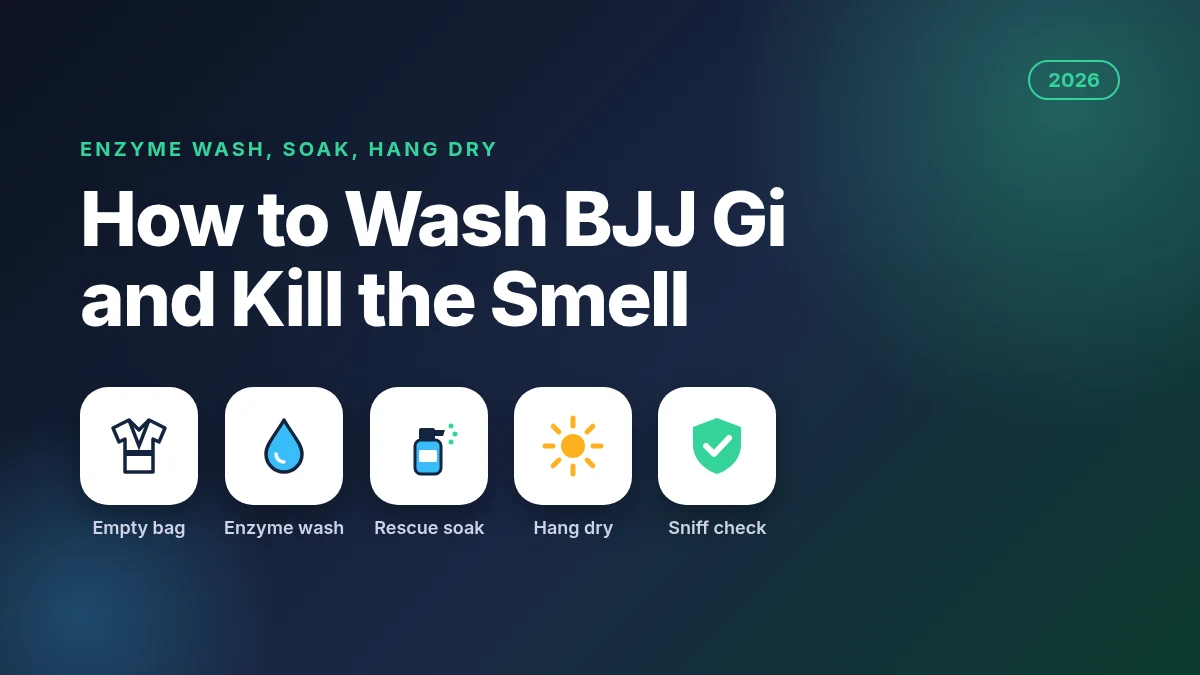
Wash the same day whenever you can: empty the bag, turn the jacket and pants inside out, use an enzyme detergent on a normal or gentle cycle, skip softener and chlorine bleach, then hang the gi fully open until bone dry. Same-day wash-plus-air-dry is the routine that stops most lasting smell before it starts.
- 1. Empty the bag fast. Do not leave a wet gi zipped in a car trunk or gym bag overnight. Hang it open if you cannot wash yet.
- 2. Turn inside out. Protect the outer weave and patches while exposing the sweat side of the collar and sleeves to the wash.
- 3. Dose enzyme detergent correctly. Use the label amount for your load size and water hardness. More soap is not better if it leaves residue.
- 4. Skip softener and chlorine bleach. Softener coats fibers. Chlorine bleach can weaken cotton and yellow whites over time.
- 5. Hang dry completely. Shape the jacket on a hanger, spread the pants, and wait until the thick collar is dry before you bag or fold it.
If class ends late, at least hang the gi open at home before bed. A wet sealed pile is only slightly better than a sealed bag. Buy enough gis for your weekly schedule so one can dry while another is on the mat; our roundup of the best BJJ gis helps you compare durability when you need a second or third uniform.
What Detergent and Additives Actually Help Kill Gi Smell?
Enzyme detergents help most because enzymes break down the body oils and protein soils that feed odor in a gi. Oxygen bleach (sodium percarbonate style products) can brighten and boost cleaning when the care label allows it. Chlorine bleach is the wrong tool for routine gi care and can damage cotton.
Grappling laundry writeups and athletic-wear care guides keep repeating the same chemistry: look for detergents that list enzymes, add an oxygen bleach product when you need a reset, and treat vinegar-in-the-wash as a myth that can fight against detergent rather than help it. If you want acidity in a final rinse, laundry communities often prefer a small amount of citric acid in the softener slot over vinegar during the main wash.
For sanitizing claims, follow product labels carefully. Lysol Laundry Sanitizer is marketed as a bleach-free rinse-cycle additive that kills 99.9% of bacteria detergents leave behind on washable fabrics, including gym clothes, when used as directed (dose into the softener compartment or during rinse, and allow the labeled rinse contact time). It does not replace detergent. Always read your gi care tag and the sanitizer label before combining products.
- Enzyme detergent: baseline for every wash when you can find one that lists enzymes on the label.
- Oxygen bleach: periodic boost for dingy or funky loads; not chlorine bleach.
- Laundry sanitizer (rinse): optional label-directed rinse step for odor-causing bacteria; never mix incompatible chemicals.
- Avoid in the main wash: fabric softener, dryer sheets, and chlorine bleach as a smell shortcut.
When Should You Rescue-Soak a Stinky Gi Instead of a Normal Wash?
Rescue-soak when a gi still smells after a correct enzyme wash, when odor “activates” only after you sweat, or when collars and armpits have months of built-up funk. A long soak with an enzyme booster and oxygen bleach gives chemistry time that a short wash cycle does not. Use this BJJ Gi Wash vs Rescue Soak Table to choose.
| Situation | Choose | Core steps | Stop and rethink if |
|---|---|---|---|
| Fresh sweat after class; gi usually smells clean when dry | Same-day normal wash | Enzyme detergent, inside out, hang dry fully | You already dried it while it still smelled wet |
| Faint collar smell returns as soon as you roll | Rescue soak, then wash | Warm soak with enzyme booster + oxygen bleach, then wash; hang dry | You keep heat-drying between failed washes |
| Gi sat sealed in a bag for days | Hang open, then rescue soak | Air it out, soak, wash, confirm no wet smell before any dryer thought | Mold spots or fabric damage appear |
| White gi dingy plus odor | Oxygen bleach soak path | Oxygen bleach per label + enzymes; never chlorine as the default | Care tag forbids bleach of any kind |
| Smell gone when wet-checked after wash | Hang dry and store dry | Full air dry; store open or in a breathable bag | You bag it even slightly damp |
| Repeated rescue soaks still fail | Retire that gi for hard training | Keep it for light drilling or replace; oils and residue can lock in | You add chlorine bleach or mystery chemicals “just once” |
Keep the soak submerged (a plate works as a weight), give enzymes hours rather than minutes when the gi is truly baked, then wash with a fresh detergent dose. Laundry-community reset writeups for stained athletic gear often add an enzyme powder booster such as Biz-style products plus oxygen bleach in a long soak; follow those product labels and never mix ammonia with chlorine bleach.
Should You Dry a Gi That Still Smells When Wet?
No. If a gi still smells after washing while it is wet, do not put it in the dryer and prefer not to “set” the odor with heat. Rewash or rescue-soak first. Hang dry only after a sniff check on the wet collar and armpits comes back clean, or at least clearly better and ready for another wash tomorrow.
Heat is what turns a fixable smell into a stubborn one. Community guides for stinky gis are blunt on this point: drying seals funk into the fibers. Air drying is the default for cotton gis anyway because machine heat also shrinks many gis; smell control and fit both improve when you stay away from the dryer.
What Is the Same-Day Checklist After Every Class?
Use this same-day checklist so smell control becomes a habit instead of a weekend project. It takes a few minutes after training and prevents most rescue soaks. Print it mentally: bag, wash, sniff, hang, store. Skip any step and you are volunteering for collar funk.
- Empty the gi from the sealed bag within hours, not days.
- Wash inside out with enzyme detergent; no softener; no chlorine bleach.
- Optional: label-directed oxygen bleach boost or rinse-cycle sanitizer when odor risk is high.
- Sniff the wet collar and pits before you commit to drying.
- Hang jacket and pants fully open until the thick seams are dry.
- Store only when dry; never in a damp sealed bag.
Cauliflower ear and other training wear-and-tear get enough attention; your training partners notice smell faster. Pair clean-gear habits with the rest of your recovery routine covered in posts like cauliflower ear care so you show up ready to train, not ready to clear the room.
How Do You Stop Gi Smell From Coming Back Long Term?
Long-term control is boring on purpose: enough gis to rotate, same-day washes, enzyme detergent, hang dry, dry storage, and a rescue soak when a normal wash fails the wet sniff test. Perfume beads and dryer sheets hide odor briefly and often make residue worse. Consistency beats one heroic laundry day.
Hard water can leave mineral and detergent film that traps odor. If your area has hard water, follow detergent label guidance for dosing or use a label-safe water softener product rather than dumping extra liquid soap. Keep rashguards and belts on the same no-sealed-bag rule; synthetics can hold oil-based odor even more stubbornly than cotton.
FAQ: How to Wash a BJJ Gi and Kill the Smell
Can I use vinegar to kill BJJ gi smell?
Vinegar is a popular tip, but many laundry-focused grappling writeups say it does little for athletic stink and can work against detergent in the main wash. Prefer enzyme detergent, oxygen bleach when allowed, and a proper rinse. If you want an acidic rinse aid, citric acid in the softener slot is the community alternative people discuss more than vinegar.
Is it safe to put a BJJ gi in the dryer?
Most cotton gis shrink with dryer heat, and heat can lock in odor if the gi still smells when wet. Hang dry is the safer default for both smell and fit. If a care tag allows low heat, only consider it after a clean wet sniff check, and accept some shrinkage risk.
Why does my gi smell fine until I start sweating?
That “rebloom” pattern usually means oils and bacteria are still in the fibers. Heat and moisture from training wake the odor up. Run a rescue soak with an enzyme booster and oxygen bleach, then return to same-day enzyme washes so the problem does not rebuild.
How often should I wash my BJJ gi?
Wash after every training session that leaves the gi sweaty. Waiting until the weekend is how sealed-bag smell starts. Own enough gis to wash and fully dry between classes instead of rotating one damp uniform.
Will laundry sanitizer replace washing my gi?
No. Sanitizers such as Lysol Laundry Sanitizer are rinse additives used with detergent as directed on the label. They can help with odor-causing bacteria left after detergent, but they do not remove body oils by themselves. Wash first, then sanitize only if the product and care tag allow it.
What Is the Bottom Line?
The bottom line is that lasting BJJ gi smell is a storage-and-chemistry problem, not a mystery curse. Wash same day with enzymes, refuse chlorine bleach and softener, never heat-dry a wet-smelling gi, and rescue-soak when normal washes fail the sniff test. Do that on loop and your collar stops announcing you before you grip up.