
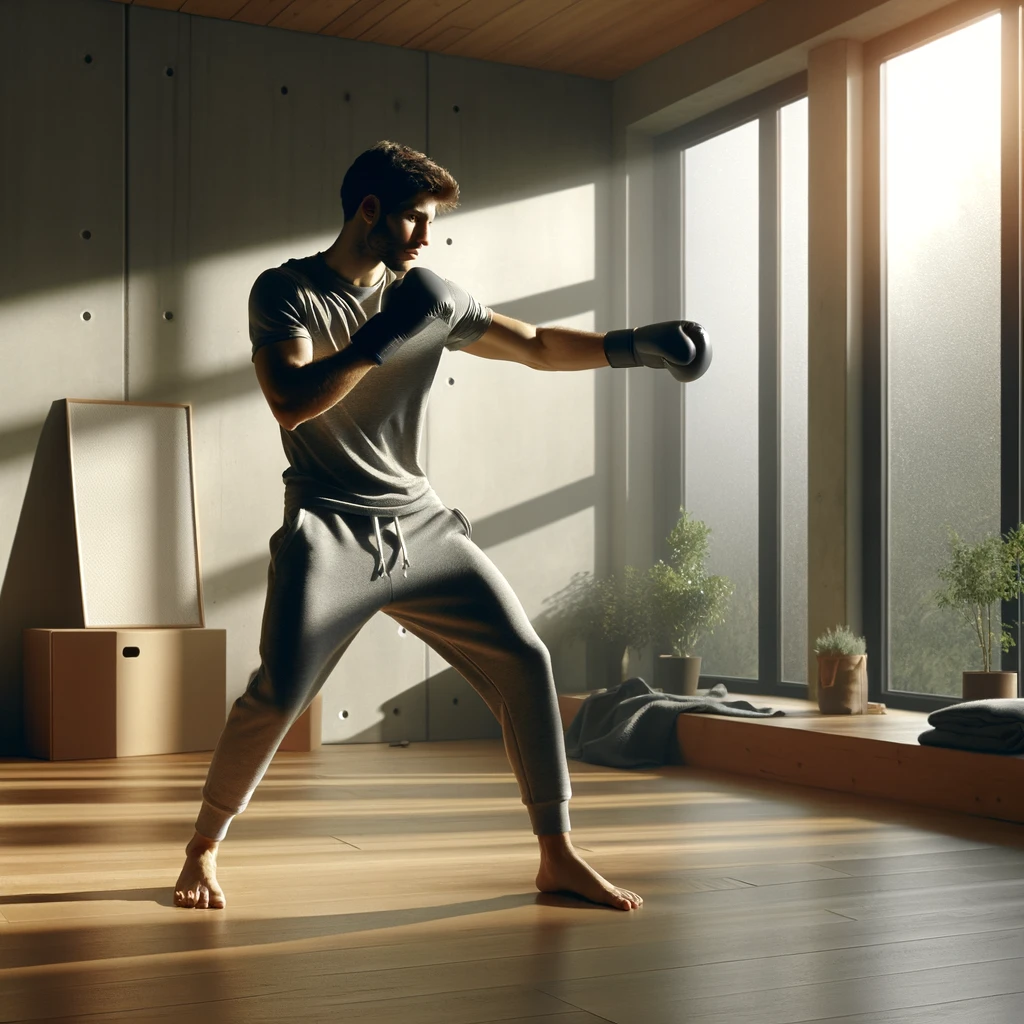
How to Shadow Box Like a Pro: Full Guide (2024)
Thanks for checking out this unbiased article on How To Shadow Box. In the realm of fitness and martial arts, shadow boxing stands out as a powerful tool, often overshadowed by more flashy counterparts like heavy bag work or sparring.
Yet, its simplicity, accessibility, and profound impact on both physical and mental health cannot be overstated. It’s a practice that champions from ancient times to modern-day warriors swear by, yet many of us overlook its potential in our own routines.
Shadow boxing is more than just throwing punches into the air; it’s an art form that engages the body and mind, crafting warriors out of weekend warriors and offering a meditative escape for the stressed.
Despite its benefits, misconceptions abound, and the practice often falls by the wayside, relegated to a warm-up routine or, worse, forgotten entirely.
This overlooks the incredible versatility and depth of training that shadow boxing provides, from enhancing cardiovascular health to refining technique and strategy.
This article dives deep into the world of shadow boxing, shedding light on its rich history, undeniable benefits, and how you can incorporate it into your life.
Whether you’re a seasoned boxer looking to hone your skills or a fitness enthusiast searching for a new challenge, shadow boxing offers a unique blend of physical exertion and mental sharpness that can transform your routine and elevate your overall well-being.
So, lace up your gloves (figuratively speaking) and prepare to explore the shadowy depths of this solitary yet empowering practice.

How To Shadow Box? A Comprehensive Guide
The Benefits of Shadow Boxing
Physical Perks: Boosting Cardio, Strength, and Endurance
Shadow boxing is a full-body workout that doesn’t just involve your arms. As you punch, duck, and weave, you’re engaging your core, legs, and glutes, turning your body into a calorie-burning machine.
The constant movement improves cardiovascular health, builds muscular endurance, and can even enhance strength over time, especially when you incorporate weighted gloves or resistance bands into your routine.
Mental Mastery: Improving Focus, Strategy, and Stress Relief
Beyond the physical, shadow boxing is a cerebral exercise. It requires concentration, as you visualize an opponent and plan your moves. This practice sharpens your focus, hones your fighting strategy, and improves reaction times.
Moreover, the rhythmic nature of throwing punches and moving your body can be incredibly meditative, offering a unique form of stress relief where you can literally punch away your worries.
Shadow Boxing vs. Traditional Workouts: What Sets It Apart?
Compared to other forms of exercise, shadow boxing is uniquely accessible and versatile. It requires no equipment or gym membership, making it perfect for home workouts or when traveling.
Unlike running or cycling, which primarily work the lower body, shadow boxing engages the whole body and can be easily adapted to suit your fitness level and goals.
Additionally, it provides a level of cognitive engagement and skill development that many traditional workouts lack, keeping both your body and mind sharp.
Shadow boxing stands as a testament to the power of simplicity in achieving comprehensive fitness goals. Its blend of physical and mental benefits, coupled with its accessibility, makes it an invaluable tool in anyone’s fitness arsenal.
Whether you’re a professional athlete or a fitness newbie, incorporating shadow boxing into your routine can open the door to improved health, sharper skills, and a deeper connection between mind and body.

Getting Started with Shadow Boxing
Gear Up: What You Need (and Don’t Need) to Start Shadow Boxing
Shadow boxing is beautifully minimalist; you don’t need fancy equipment to get started. However, a few essentials can enhance your practice:
- Comfortable clothing: Mobility is key, so wear gear that allows you to move freely.
- Good shoes: Supportive footwear can help prevent foot and ankle injuries, especially when incorporating dynamic movements.
- Hand wraps or gloves (optional): For those looking to replicate the boxing experience more closely or protect their hands, light gloves or wraps can add a level of authenticity and safety.
Setting the Stage: Choosing Your Space and Creating the Right Environment
Finding the perfect spot for shadow boxing is crucial. You need enough room to move forward, backward, and side to side:
- Indoor spaces: A living room, garage, or any open space where you won’t knock into furniture. If you have a mirror, even better; it can provide instant feedback on your form.
- Outdoor areas: A backyard, park, or any quiet, open space can be invigorating, offering fresh air and a change of scenery.
- Creating the right atmosphere: Consider playing music that motivates you or using a timer app to structure your rounds for a more authentic boxing experience.
Shadow boxing is an exercise in imagination and visualization. Setting up a conducive environment is not just about physical space but also about creating a mental arena where you can focus, strategize, and grow.
Whether you’re in a cramped apartment or have an expansive backyard, what truly matters is stepping into that space with the mindset of a fighter ready to train, improve, and conquer.
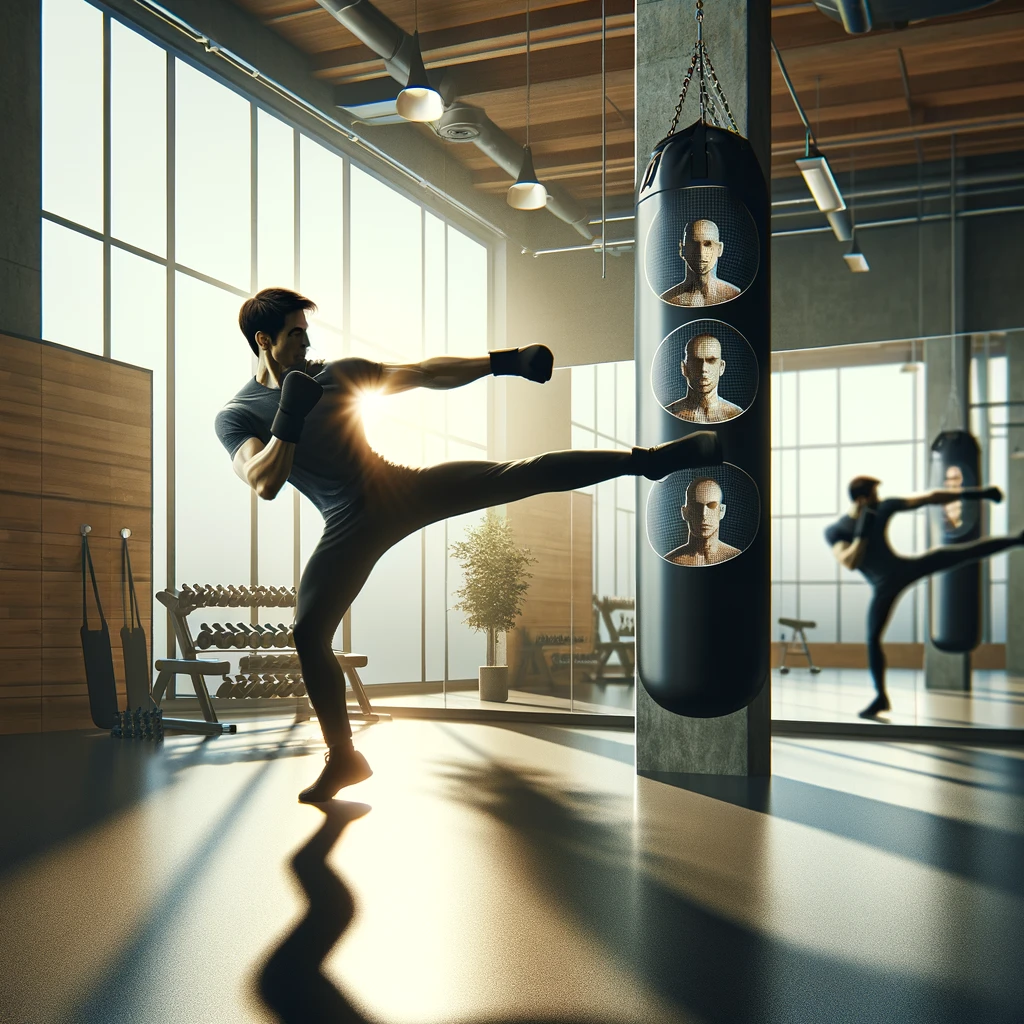
The Basics of Shadow Boxing
Stance and Movement: The Foundation of Your Shadow Boxing Practice
Mastering your stance and movement is crucial to effective shadow boxing. Begin with the basics:
- Proper stance: Position your feet shoulder-width apart, with one foot slightly forward. Balance your weight evenly and keep your knees slightly bent.
- Movement: Practice moving forward, backward, and side-to-side while maintaining your stance. This agility is key to dodging and weaving like a pro.
Basic Punches: Jab, Cross, Hook, and Uppercut Explained
Each punch in shadow boxing has its purpose and technique:
- Jab: A quick, straight punch thrown with your lead hand. It’s your go-to for range finding and setting up other punches.
- Cross: A powerful straight punch from your rear hand, crossing your body to the target.
- Hook: A semi-circular punch thrown with either hand, targeting the side of your opponent’s head or body.
- Uppercut: A vertical, upward punch aimed at getting under the opponent’s guard to hit the chin or torso.
Combining Movements: How to Flow Like Water and Sting Like a Bee
Once you’re comfortable with the basics, start combining movements with punches to create fluid sequences:
- Footwork and punches: Practice moving in all directions, integrating jabs and crosses to simulate attacking and retreating.
- Adding complexity: Incorporate hooks and uppercuts into your combinations, focusing on smooth transitions and maintaining balance.
Shadow boxing is not just about throwing punches; it’s about creating a dance of combat, where your movements and strikes tell a story of attack and defense.
By mastering the basics, you lay the groundwork for a shadow boxing routine that is both a rigorous workout and a form of self-expression.

Advanced Shadow Boxing Techniques
Incorporating Head Movement and Footwork: Dodging Imaginary Blows
Advanced shadow boxing involves more than just punches; it’s about becoming an elusive target.
- Head movement: Practice slipping, bobbing, and weaving. Imagine dodging your opponent’s punches, moving your head and upper body side to side, and up and down.
- Advanced footwork: Learn to pivot, shuffle, and change directions quickly. This not only helps in defense but also positions you to land effective counter-strikes.
Adding Kicks and Knees: For the Mixed Martial Arts Enthusiasts
If you’re looking to blend shadow boxing with elements of MMA, integrating kicks and knees can add a new dimension to your routine.
- Basic kicks: Start with front kicks, roundhouse kicks, and side kicks. Focus on form and balance before power.
- Knee strikes: Practice knee strikes by driving your knee upward, imagining you’re targeting your opponent’s body or head.
Shadow Grappling: Because Why Not Throw in Some Air Judo?
For those who want to incorporate grappling techniques into their shadow boxing:
- Imaginary takedowns: Practice the motions of shooting for a takedown, such as a double leg or single leg, using your imagination to picture an opponent.
- Shadow clinch work: Work on your clinch game by simulating hand fighting, throwing knees, and practicing defense against takedowns.
Advanced shadow boxing techniques not only enhance your striking skills but also improve your overall combat readiness, offering a well-rounded approach to martial arts training.
By incorporating head movement, footwork, kicks, knees, and even elements of grappling, you transform your shadow boxing routine into a comprehensive workout that challenges every aspect of your fighting game.

Creating Your Shadow Boxing Routine
Beginner Routines: Starting Slow and Building Confidence
For those new to shadow boxing, creating a simple, structured routine is key:
- Warm-up: Begin with 5-10 minutes of light cardio (jogging in place, jumping jacks) to get your heart rate up.
- Basic combinations: Start with simple punch combinations (jab-cross, jab-cross-hook) for 2-3 rounds, focusing on form and technique.
- Cool down: End with stretching to help with recovery and flexibility.
Intermediate Routines: Upping the Intensity and Complexity
Once comfortable with the basics, introduce more complex movements and increase the intensity:
- Add head movement and footwork: Incorporate slips, ducks, and lateral movement into your combinations.
- Increase round length: Move from 2-3 minute rounds to 3-4 minutes, with shorter rest periods to build endurance.
- Incorporate bodyweight exercises: Between rounds, add push-ups, sit-ups, or squats to improve overall strength and conditioning.
Advanced Routines: Challenging Yourself and Pushing Limits
For seasoned practitioners, an advanced routine should test the limits of your skills and stamina:
- Complex combinations: Incorporate advanced punches, kicks, and movement into longer combinations.
- High-intensity rounds: Increase the round time to 4-5 minutes with high-intensity punching and footwork, minimizing rest to mimic fight conditions.
- Mental simulation: Focus on visualizing opponents, planning strategies, and reacting to imagined attacks to sharpen your mental game.
Creating a tailored shadow boxing routine that aligns with your skill level and goals is essential for progression. Whether you’re just starting out or pushing the bounds of your abilities, the key is consistency and gradual improvement.
Remember, the beauty of shadow boxing lies in its flexibility; it can be molded and adapted to suit your unique path in the sweet science of fighting.

Tips and Tricks for Effective Shadow Boxing
Visualization: Fighting an Invisible Opponent
One of the most powerful tools in shadow boxing is the power of the mind:
- Imagine an opponent: Visualize an opponent’s movements and reactions to make your practice more realistic and engaging.
- Plan your attacks and defenses: Anticipate and react to your imaginary opponent’s moves, improving your strategic thinking and reaction times.
Timing and Rhythm: Dancing to the Beat of Your Punches
Developing a sense of timing and rhythm is essential for fluid movements and effective striking:
- Use a metronome or music: Practice your punches and footwork to the beat to develop a natural flow and improve your timing.
- Vary your speed: Mix fast, explosive bursts with slower, more deliberate movements to mimic the unpredictable pace of a real fight.
Incorporating Equipment: When to Introduce Weights and Resistance Bands
While shadow boxing can be done with no equipment, adding small weights or resistance bands can enhance your workout:
- Hand weights: Light weights (1-2 pounds) can help build shoulder endurance and speed without compromising form.
- Resistance bands: Use them to add resistance to punches and footwork, improving strength and explosive power.
Recording and Reviewing Your Sessions
Self-analysis is crucial for improvement:
- Record your sessions: Use a camera to record your shadow boxing sessions. Watching yourself can reveal areas for improvement in technique and form.
- Seek feedback: Share your videos with coaches or experienced boxers to get constructive feedback on how to refine your skills.
Shadow boxing is more than just throwing punches at the air; it’s a sophisticated blend of physical exercise, mental visualization, and rhythmic precision.
These tips and tricks can significantly enhance the quality of your practice, making each session more productive and closer to the essence of real combat.
Remember, the goal is to merge the physical with the mental, turning each movement into a deliberate act of preparation for whatever challenges may come your way, inside or outside the ring.

Incorporating Shadow Boxing into Your Workout Regimen
Warm-Up or Cool Down: How Shadow Boxing Can Enhance Your Regular Workouts
Shadow boxing is not just a standalone workout; it’s a versatile tool that can elevate your existing fitness routine:
- As a warm-up: A few rounds of shadow boxing can increase your heart rate, loosen up your muscles, and sharpen your focus, preparing you for a more intense workout.
- As a cool-down: After a strenuous workout, winding down with shadow boxing can help lower your heart rate gradually and keep your muscles from tightening up.
Stand-Alone Workouts: Structuring a Full Session of Shadow Boxing
For days when you’re short on time or equipment, shadow boxing can serve as a complete workout:
- Structure: Start with a light warm-up, followed by several rounds of shadow boxing, increasing intensity and complexity with each round. End with a cool-down and stretching.
- Variety: Keep your sessions interesting by experimenting with different combinations, speeds, and movement patterns.
Cross-Training: Mixing in Shadow Boxing with Other Fitness Activities
Incorporating shadow boxing into a cross-training regimen can improve overall athletic performance and reduce the risk of injury:
- With strength training: Shadow boxing on your rest days can maintain cardiovascular fitness without overtaxing your muscles.
- With endurance sports: For runners, cyclists, and swimmers, shadow boxing can enhance upper body strength and coordination, balancing out the lower body focus of these activities.
Creating a Personalized Shadow Boxing Routine
Tailor your shadow boxing sessions to fit your fitness level, goals, and interests:
- Set goals: Whether you’re looking to improve endurance, strength, coordination, or just blow off some steam, setting clear objectives can help structure your sessions more effectively.
- Listen to your body: Adjust the intensity, duration, and frequency of your shadow boxing workouts according to your body’s responses and recovery needs.
Shadow boxing is a dynamic and adaptable component of a well-rounded fitness program. Whether used as a warm-up, cool-down, stand-alone workout, or part of a cross-training plan, it offers benefits that extend beyond the physical to include mental sharpness and strategic thinking.
By integrating shadow boxing into your routine, you’re not just punching air; you’re building a foundation for better health, improved athletic performance, and a stronger, more resilient you.

Common Mistakes in Shadow Boxing and How to Avoid Them
Form Faux Pas: Ensuring Your Punches Aren’t Just Hot Air
Proper form is crucial in shadow boxing to maximize its benefits and minimize the risk of injury:
- Not fully extending punches: Ensure each punch is fully extended to engage the right muscles and simulate real fighting conditions.
- Ignoring defense: Remember to practice defensive movements like slips and blocks, not just offensive punches.
Overtraining: Finding the Right Balance and Avoiding Burnout
While shadow boxing is low-impact, it’s still possible to overdo it:
- Listen to your body: Take rest days as needed and be mindful of signs of overtraining, such as prolonged soreness or fatigue.
- Vary your workouts: Incorporate other forms of exercise to prevent burnout and keep your routines fresh and engaging.
Lack of Progression: How to Keep Leveling Up Your Game
To avoid plateaus, continuously challenge yourself and advance your skills:
- Increase complexity: Gradually add more advanced techniques, combinations, and movements as you become more comfortable.
- Set goals: Regularly setting and working towards new goals can motivate you to push your boundaries and improve.
Shadow boxing, like any skill, requires mindfulness and dedication to fully reap its benefits.
By paying attention to form, listening to your body to avoid overtraining, and continuously challenging yourself, you can avoid common pitfalls and elevate your shadow boxing to new heights.
Remember, the goal is not just to go through the motions but to engage fully with the practice, pushing yourself to grow stronger, more skilled, and more confident with each session.

The Mental Game: Using Shadow Boxing for Focus and Meditation
Mind Over Matter: Mental Benefits of Engaging in Combat with the Air
Shadow boxing is not just a physical exercise; it’s a mental and spiritual journey:
- Focus and clarity: The concentration required to visualize opponents and execute precise movements can improve mental focus and clear the mind.
- Stress and anxiety reduction: The rhythmic nature of shadow boxing, combined with deep breathing, can have a meditative effect, reducing stress and anxiety levels.
Breathing Techniques: Oxygenate Your Brain for Better Focus and Relaxation
Proper breathing is a cornerstone of effective shadow boxing, enhancing both performance and relaxation:
- Rhythmic breathing: Synchronize your breath with your movements to improve oxygen flow and endurance.
- Deep breathing: Use moments of lower intensity to practice deep breathing, filling your lungs fully and then slowly exhaling to increase relaxation and focus.
Visualization for Improved Performance
The power of the mind can transform shadow boxing from a simple exercise into a powerful tool for personal development:
- Visualize success: Imagine yourself mastering techniques and overcoming challenges. This positive mental rehearsal can boost confidence and performance.
- Use imagery: Picture yourself in a real fight, facing an opponent. This level of visualization can enhance reaction times, strategic thinking, and adaptability.
The mental aspects of shadow boxing are as important as the physical ones. Engaging in this practice not only sharpens the body but also hones the mind, offering a path to mental clarity, reduced stress, and a heightened sense of inner calm.
By incorporating focused breathing techniques and visualization, shadow boxers can unlock a deeper level of training that transcends the physical realm, tapping into the mental and spiritual benefits of this ancient practice.
Conclusion
Thanks for checking out this article on How To Shadow Box. We’ve journeyed through the basics of getting your stance right, to the complexities of incorporating advanced techniques and even tapping into the mental and meditative aspects of shadow boxing.
Whether you’re a beginner just dipping your toes into the world of fitness or a seasoned athlete looking for a new way to enhance your routine, shadow boxing offers a unique blend of physical exertion, mental sharpness, and spiritual growth.
Shadow boxing isn’t just about throwing punches into the void; it’s a comprehensive workout that challenges your body, sharpens your mind, and nurtures your spirit.
By incorporating the techniques and principles discussed, you’re not just preparing for a physical fight; you’re equipping yourself with the tools to tackle life’s challenges with grace, resilience, and unwavering focus.
So, lace up those gloves (even if they’re imaginary), set your stance, and start shadow boxing your way to a healthier, happier you.
FAQ
How do I start shadow boxing?
Starting shadow boxing is a great way to enhance your fitness and boxing skills. Begin by standing in front of a mirror to observe your form. Position your lead foot slightly forward and your rear foot back for balance.
Keep your lead arm ready to jab and your other hand up to guard your face. Focus on throwing punches with precision to build muscle memory, gradually incorporating different techniques as you gain confidence.
What are the rules of shadow boxing?
Shadow boxing is quite flexible, but here are a few guidelines to make your practice more effective. Use boxing gloves if you want to simulate the weight of fighting gloves, enhancing your boxing skills. Always start with a warm-up to prevent injuries like tennis elbow.
Work on your footwork, moving your lead foot and rear foot to maintain balance. Practice in rounds, similar to a boxing gym setting, to build endurance—starting with three-minute rounds and aiming for that second round with less rest in between.
How do you train for shadowboxing?
Training for shadowboxing involves focusing on different techniques, from jabs and crosses to hooks and uppercuts. Work on your combos, aiming to seamlessly transition between them. Enhance your footwork to improve agility and balance.
Training in front of a mirror can help refine your technique. Incorporate exercises that strengthen your quads, arms, and core to support your movements. Regular practice builds muscle memory, making you a better fighter.
How to imagine shadow boxing?
Imagining an opponent while shadowboxing is crucial for making the practice more dynamic and realistic. Visualize the opponent’s moves and react accordingly, using defensive and offensive strategies.
This not only helps in improving your boxing skills but also enhances your ability to anticipate and counteract in a real fight. Practicing close range and long-range combos can prepare you for various scenarios.
Can shadow boxing improve my fitness?
Absolutely! Shadow boxing is an excellent workout that can burn a significant number of calories.
It engages multiple muscle groups, from your legs to your core and arms, providing a balanced workout. It’s also a great way to improve cardiovascular health, endurance, and flexibility.
Is shadow boxing effective without a punching bag?
Yes, shadow boxing can be highly effective even without a punching bag. It focuses on technique, speed, and movement, allowing you to practice combos and footwork without the need for equipment. Plus, it’s a great way to develop muscle memory for boxing skills.
How often should I practice shadow boxing?
The frequency of your shadow boxing sessions depends on your fitness and training goals. For general fitness, incorporating shadow boxing into your routine 2-3 times a week can offer significant benefits.
If you’re using it to complement your training in a boxing gym, you might adjust based on your overall workout schedule.
Will shadow boxing help with weight loss?
Shadow boxing can be a powerful tool for weight loss, as it burns calories and increases your metabolic rate. Combined with a healthy diet and other forms of exercise, it can help you achieve a caloric deficit necessary for weight loss.
How can I avoid injuries while shadow boxing?
To avoid injuries such as tennis elbow, ensure you warm up properly before each session. Focus on maintaining correct form, especially when throwing punches, to avoid strain. Gradually increase the intensity of your workouts to allow your body to adapt safely.
What should I focus on during my first few sessions of shadow boxing?
In your initial sessions, concentrate on learning the basic punches and mastering your stance. Pay attention to your lead foot and rear foot placement, and practice moving smoothly.
Building a solid foundation in these early stages will make you a better fighter as you progress to more advanced techniques and combos.


