How to Wrap Hands for Boxing Without Going Numb (2026)
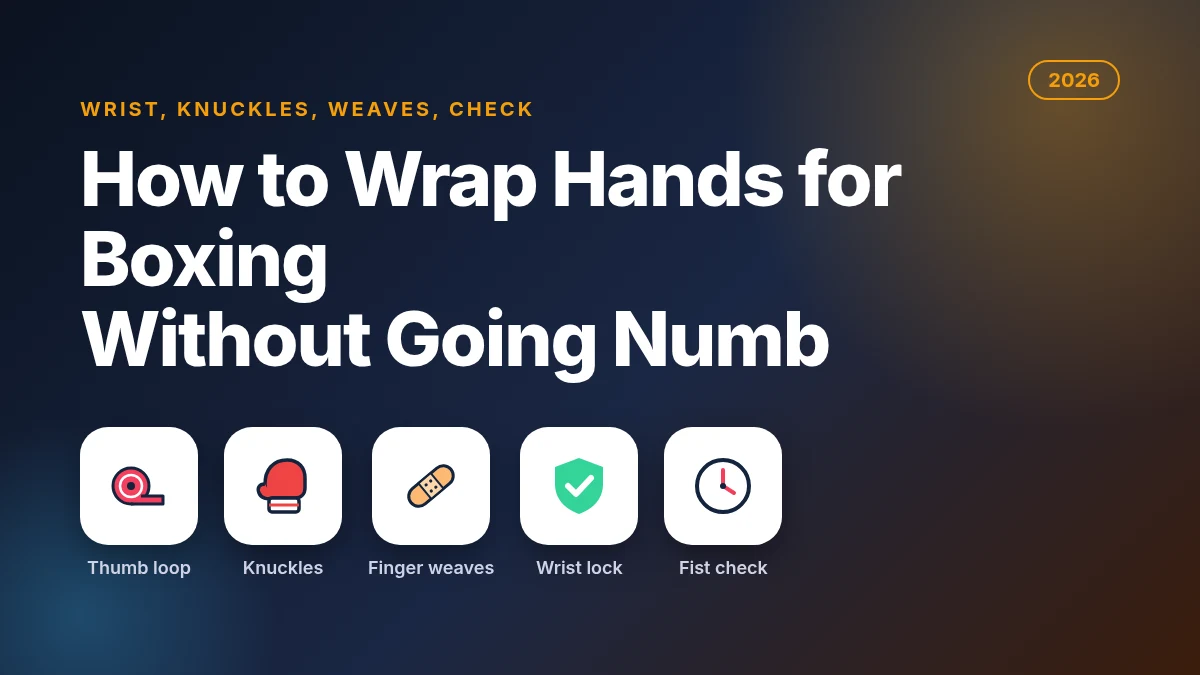
Short answer: wrap your hands before every bag, mitt or sparring session. Put the thumb loop on, wrap the wrist 2 to 3 times, cover the knuckles 2 to 3 times, weave between the fingers to lock the knuckle padding, support the thumb, then finish with more wrist wraps and Velcro. The wrap should feel snug when you make a fist, not tingly, numb or pale.
Most beginners search how to wrap hands for boxing after a rushed gym demo or a 30-second phone video leaves their wrists aching, their fingers purple or the Velcro popping off mid-round. Forum threads in boxing communities ask the same things on loop: how tight is too tight, whether 120-inch wraps are enough, and why gel wraps feel easier but leave the wrist soft.
This guide gives you a clear beginner sequence for cotton or Mexican-style Velcro wraps, the Boxing Hand Wrap Mistake Table, how long a wrap should be, when gel wraps are fine, and the circulation checks that matter more than looking like a pro.
Why Do Boxers Wrap Their Hands?
Boxers wrap their hands to stabilize the small bones of the hand and the wrist before the glove goes on. A good wrap packs padding over the knuckles, keeps the wrist from folding on impact and reduces the chance that a glancing shot or a heavy bag hit sprains a finger joint.
Everlast describes wraps as protection for tendons and muscles plus wrist support under the glove. That matches what you feel in training: the wrap turns a floppy hand into a solid fist so force goes through the knuckles instead of twisting the wrist.
Hand and finger sprains are common in sports that jam or bend fingers. Cleveland Clinic notes jammed fingers often heal in one to two weeks when mild, and AAOS OrthoInfo says moderate sprains may need buddy support and guided motion. Wrapping will not make you invincible, but a loose wrist under a 16 oz glove is asking for the kind of sprain those pages describe.
What Length Hand Wrap Should You Use?
Most adult beginners should start with 180-inch cotton or Mexican-style wraps. Shorter 120-inch wraps work for smaller hands or light bag days, but they leave less fabric for knuckle coverage and wrist finish. Kids and youth wraps are shorter still and should match the glove size.
- 180 inch: best default for adult bag work and sparring; enough length for wrist, knuckles, finger weaves and a solid finish.
- 120 inch: faster to put on, less bulk, better for small hands or short mitt sessions; you may run out of fabric before the wrist is locked.
- Gel or quick wraps: slip on like fingerless gloves; convenient for pad work, weaker wrist support than a full cloth wrap.
- Gauze and tape: competition style, usually applied by a coach, not reusable for daily gym training.
Everlast notes that 180-inch wraps give more coverage for larger hands and harder sessions, while 120-inch wraps suit smaller hands or lighter work. If you are shopping for fabric type and durability, our roundup of the best boxing hand wraps compares cotton, Mexican and gel options without turning this how-to into a product pitch.
How Do You Wrap Hands for Boxing Step by Step?
Use this beginner sequence with a flat, untangled Velcro wrap on a dry hand. Keep the hand open and fingers spread until the knuckle passes are done, then make a fist to check the finish. Expect the first few tries to take a few minutes; speed comes after the pattern feels automatic.
- 1. Thumb loop. Slide the loop over your thumb so the wrap rests across the back of your hand and the Velcro end points toward the wrist.
- 2. Wrist base. Wrap the wrist 2 to 3 times just above the wrist bone. Snug, not crushing.
- 3. Across the hand to the knuckles. Bring the wrap diagonally over the back of the hand and cover the knuckles 2 to 3 times so the striking surface is padded.
- 4. Finger weaves. Pass the wrap between pinky and ring, then ring and middle, then middle and index, returning across the back of the hand each time so the knuckle padding cannot slide.
- 5. Thumb support. Loop once around the thumb and cross back to the wrist so the thumb is braced without being pinned open.
- 6. Finish the wrist. Use the remaining length for 2 to 3 more wrist wraps and secure the Velcro. Make a fist: the wrap should lock the wrist and feel solid over the knuckles.
If you run out of wrap before step 6, you either started too loose, stacked too many knuckle layers, or need a longer wrap. Rewrap rather than stretching the last foot until it digs in.
How Tight Should Boxing Hand Wraps Be?
Hand wraps should be snug enough that the wrist does not fold when you throw a jab, and loose enough that your fingertips stay warm, pink and fully movable. Tingling, numbness, throbbing or pale fingers mean the wrap is too tight: unwrap and start again.
A useful check is the fist test. After Velcro, close your hand hard inside the wrap. You should feel support across the knuckles and a firm wrist, with no hot spots cutting into the thumb web or the back of the hand. Then open and close the fingers a few times before the glove goes on.
Beginners often wrap the palm into a giant ball of fabric. Leave the palm relatively clear so you can close a tight fist; the protection belongs on the wrist, knuckles and between the fingers, not as a pillow in the middle of the hand.
What Mistakes Ruin a Boxing Hand Wrap?
Most bad wraps fail for the same five reasons, and they show up fast once the gloves go on. Use this Boxing Hand Wrap Mistake Table before your next session so you can spot the failure mode in under a minute and rewrap instead of training through a bad setup.
| Mistake | What you feel | Fix | Why it matters |
|---|---|---|---|
| Wrap too tight from the first wrist pass | Fingers tingle, go numb or turn pale within minutes | Rewrap looser; keep fingertip color and full fist motion | Circulation loss hurts focus and can injure soft tissue |
| Skipping finger weaves | Knuckle pad slides down into the palm mid-round | Weave between each finger after the knuckle layers | Sliding padding leaves knuckles bare under the glove |
| Endless palm wrapping | Cannot make a tight fist; glove feels mushy | Keep fabric on wrist, knuckles and weaves; leave palm open | A soft fist dumps force into the wrist |
| Thumb pinned open or crushed | Thumb pain on hooks or when catching punches | One supportive thumb loop, then return to the wrist | A hyperextended or trapped thumb is a common jam |
| 120-inch wrap on a big hand for sparring | Velcro barely reaches; wrist finish is thin | Switch to 180-inch for hard days | Short wraps run out before the wrist is locked |
Fix the table items before you blame the gloves. A glove cannot save a wrap that already cut off blood flow or left the wrist soft.
Are Gel Hand Wraps Good Enough?
Gel or quick wraps are fine for light bag work, mitt sessions and busy class nights when you need to get gloves on fast. They are usually weaker for wrist support than a full cloth wrap, which is why serious sparring and heavy bag power work still favor cotton or Mexican-style wraps.
If your wrists already feel unstable, skip gel wraps for hard sessions. Use a proper wrap, strengthen your fists with controlled bag work and keep sparring power matched to your experience. New gloves also feel safer once they are broken in; our guide on how to break in boxing gloves covers that without rushing leather into the dryer.
How Do You Care for Hand Wraps After Training?
Hang wraps to dry after every session and wash them regularly. A damp wrap left in a closed gym bag becomes the same bacteria farm that makes gloves reek, and that smell transfers straight into your next wrap job. Dry fabric also keeps Velcro and elastic working longer.
- Unroll wraps fully after training so they dry.
- Wash when they smell or look dirty; air dry to keep elastic alive on Mexican-style wraps.
- Do not share sweaty wraps; skin infections travel easily in boxing gyms.
- Replace wraps that have lost stretch, frayed Velcro or permanent sour smell.
If glove odor is already a problem, fix the gloves and the bag habit together. Our guide to why boxing gloves smell explains the drying routine that keeps both gloves and wraps usable.
FAQ: How to Wrap Hands for Boxing
How long should boxing hand wraps be for beginners?
Most adult beginners do best with 180-inch wraps. They leave enough fabric for wrist support, knuckle coverage and finger weaves. Use 120-inch wraps only if your hands are small or the session is light.
Should you wrap hands for bag work only?
Yes. Wrap for bag work, mitts and sparring. The heavy bag jars the wrist and knuckles even when nobody is hitting you back, so skipping wraps on bag days is how many beginners earn their first sprain.
Why do my fingers go numb in hand wraps?
Numb or tingling fingers usually mean the wrap is too tight, especially around the wrist or thumb. Unwrap, redo the sequence with less tension and check that fingertips stay warm and colored before you glove up.
Can I reuse hand wraps without washing?
You can reuse a dry, clean-smelling wrap a few times, but wash regularly. Sweat left in fabric feeds odor and skin bacteria. Hang wraps open after every session so they are not damp the next day.
Do gel wraps replace cloth wraps?
Not for hard sparring or max-power bag work. Gel wraps are a convenience option with less custom wrist support. Keep cloth wraps for the sessions where your wrists take real load.
What Is the Bottom Line?
The bottom line is that a good boxing hand wrap is a short checklist, not a magic ritual: thumb loop, wrist, knuckles, finger weaves, thumb support, wrist finish, then a fist-and-circulation check. Start with 180-inch wraps, keep the palm clear, and rewrap the moment fingers tingle. Do that every session and your wrists and knuckles will outlast your excuses.